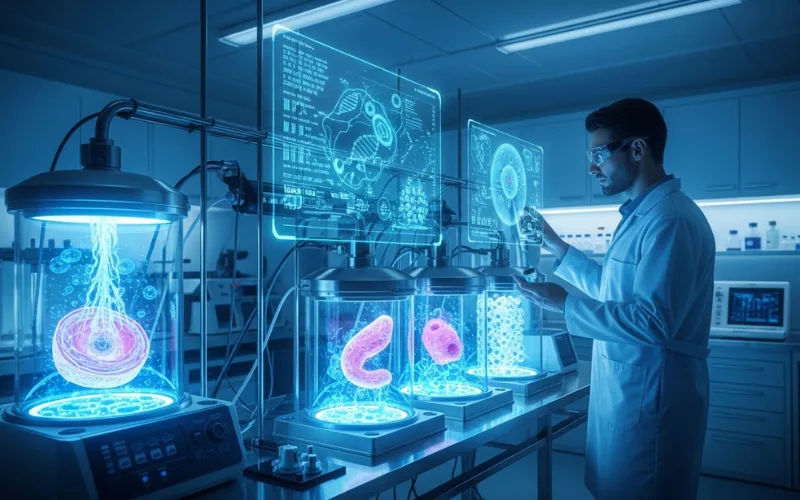
Regenerative medicine has become something that is not a far-off dream being talked over in the research labs or in research symposiums. It has become an active international movement that is transforming the way the world comprehends healing, longevity and the inherent self-healing power inherent within the body.
What was initially thought to be experimental, is gradually becoming a part and parcel of a structured clinical setting, with scientific validation and more complex regulation. With the increased pace of research and the development of oversight systems, new global standards are emerging to make regenerative medicine a conceptual becoming an established and professional field of medicine.
The investigation of these new standards is much more revealing than the clinical development. It represents a significant change in thinking and attitude to work all over the world, professionalism, and cooperative healthcare. As the history of this field shows, innovation with responsibility and ethical management can transform contemporary medicine and keep the security and trust of patients.
The Awakening of World-wide Scientific Coincidence

The increasing harmonization of international scientific communities is one of the most important trends that define regenerative medicine in the world. Scholars in North America, Europe, Asia, and Latin America are collaborating on an unprecedented level.
Multi center and cross border clinical trials have become a more frequent phenomenon and this has enabled researchers to combine data, compare methods and validate results across a wide range of populations. Such kind of coordination minimizes the occurrence of fragmentation and nurture a common way forward.
This international conformity helps to enhance stability and uniformity. Standardized research protocols, standardized reporting frameworks and evaluation systems recognized internationally help to make sure that therapies are evaluated based on similar standards. Instead of working in solitary confinements, scientists are coming up with a common language and standardized methodology that increases reproducibility and transparency.
The more they cooperate, the more they are responsible. Scientific credibility is becoming stronger through rigorous peer reviewing procedures, increased publication standards and well-orchestrated regulatory control mechanisms. Consequently, medical practitioners and patients are assured of increased clarity, reliability and confidence in emerging therapies.
Regulatory Evolution and Patient Protection

With the increasing field of regenerative medicine, the regulatory institutions of the world are sharpening their models to strike a balance between innovation and safety. The availability of clearer guidelines on the sourcing, laboratory processing, and cryogenic storage of cells and their clinical use are increasing the quality benchmark of responsible practice. These regulatory changes are not the limiting barriers but the protective measures aimed at protecting the patients and providing the sustainability in the long run.
Health authorities and governments are prioritizing more on traceability systems, quality controls in manufacturing and open documentation processes. This is to have assurance that the handling of biological materials is under tight control and that the treatment of patients is under proven protocols. These approaches defend people and promote a consistent and confident atmosphere of ethical providers.
Instead of retarding innovation, changing regulations promote rigorous progress. Clinic and research centers, which are in line with internationally accepted standards, show a sense of credibility, patient well-being, and evidence-based development. Such controlled level of regulation eventually gives greater strength and stability to the field.
Ethical Frameworks at the Centre of Progress

The issue of ethics has now taken center stage in the world debate on regenerative medicine. The thoughts on the source of donors, expectations of the treatment and risk-communication have ceased to be peripheral. They have also become the cornerstones in accountable growth and global reputation.
The new global standard includes a characteristic of enhanced Informed consent processes. During patient education, they are given detailed descriptions of possible advantages, risks, constraints and feasible results. Clarity in decision making is enabled through detailed documentation so that people are enabled to make decisions on facts and never on speculations. This openness enhances patient autonomy and boosts the confidence of clinical providers.
The same applies to research settings where ethical governance is involved. Review boards that work independently, high standards on the approval of specific protocols, open trial registration and data integrity are now a basic requirement. The sphere of research and clinical implementation strengthens its validity and trust by integrating ethical responsibility into all phases of its implementation.
Technology and Precision as the New Benchmark
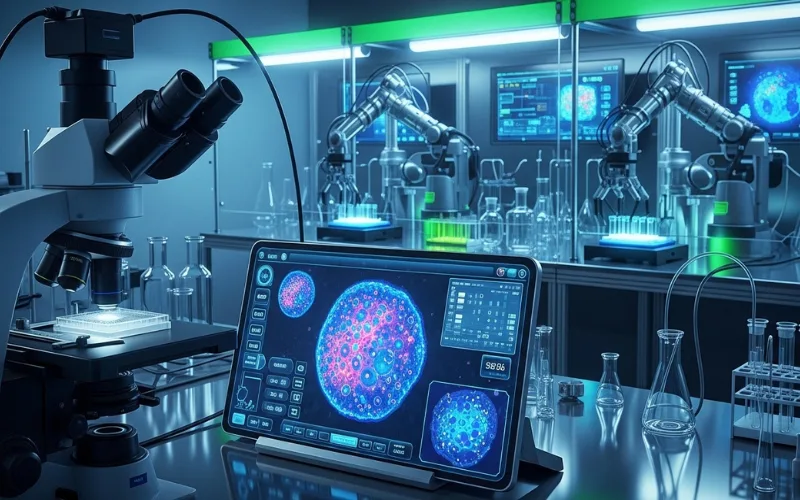
The future regenerative medicine is still influenced by technological innovation. The isolation, purification, imaging, and laboratory analytical technologies have resulted in dramatic increases in the precision and reproducibility. These innovations minimize the variability and increase the consistency across clinical uses.
Real-time monitoring of cellular preparation as well as environmental conditions and quality assurance checkpoints are now possible through automation and digital tracking systems. Starting with storage temperatures to transportation logistics, all the steps of handling could be logged and checked. This electronic infrastructure reduces error, and increases traceability.
The accuracy has become the new feature of contemporary practice. Therapies are becoming personal, precise and documented. This trend of careful recording changes the experimental opportunities into the organized medical forms that fulfill the international requirements.
Education and Professional Standards
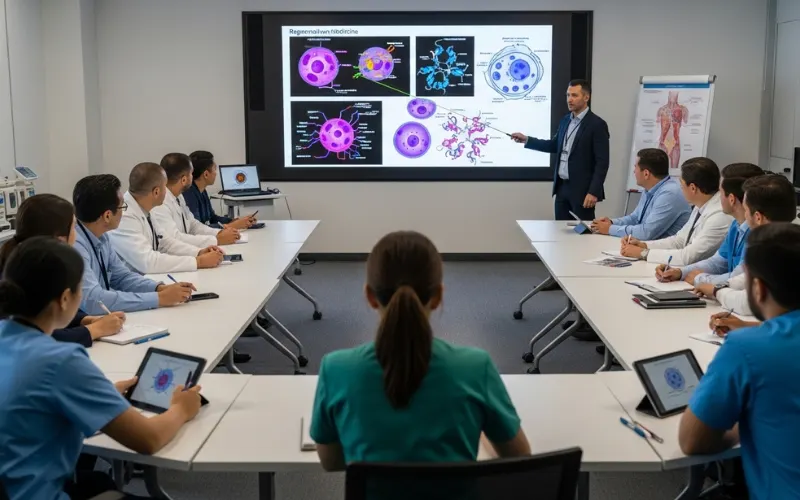
The other major international trend that is defining regenerative medicine is the reinforcement of career education channels. Doctors joining the profession are more and more expected to pass special training courses, laboratory certification and curriculum continuity courses. These educational systems guarantee practitioners to have scientific knowledge and clinical competency.
The continuous work on skills is also performed with the help of international conferences, joint workshops, and academic exchange programs. Well-organized programs offer clinicians a proper avenue to move into such a specialized field of work in a responsible manner. The adaptability is strengthened by continuous learning, with the scientific discoveries constantly changing.
Improved quality of education is directly related to safer patient experiences. An educated practitioner is in a better position to determine suitability, control expectations and execute protocols in a responsible manner. Education is that linkage between innovative research and ethical clinical practice.
Global Centers of Excellence
With the increase in the international standards, some institutions are becoming recognized centers of excellence. These centers practice under organized regulations, put emphasis on evidence-based approaches and take part in research projects that are peer reviewed.
One such institution is stem cell institute Panama at auragens.com, which functions under internationally acclaimed guidelines although leading to the greater development of the regenerative medicine field. Having centers that meet the changing international criteria increase credibility to their patients and the subjects as a whole.
These organizations are not only treatment institutions. They are the tokens of responsible innovation, transparency, and commitment to clinical integrity in the long term. With the support of the global standards, they contribute to the formation of the further evolution of the field and increase the public confidence.
Data Driven Outcomes and Transparency

The contemporary regenerative medicine is becoming more determined by quantifiable and evident results. Planned follow-ups with patients, periods of extended monitoring, and thorough reporting capabilities are no more perceived as optional additions but as a general rule to follow. This is a fact-based strategy that guarantees perpetual enhancement.
Reported results enable clinicians and researchers to streamline the treatment guidelines, find best practices, and correct those that need additional studies. Open reporting helps in cooperation and builds group knowledge throughout global connections.
A culture that is based on quantifiable outcomes brings the field to a closer to mainstream healthcare integration. With higher reliability and standards of documentation, wider acceptance in the established medical systems is achievable.
Integration with Traditional Medicine

It is more and more the case that regenerative medicine is no longer standing on its own, but as is being placed alongside other medical fields. The presence of collaborative relationships between regenerative experts and conventional health care providers will promote a holistic approach in assessing patients and coordinating treatment decisions.
The practitioners are able to assess the therapies by working with standard medical constructs considering the health broadly. This combination method improves safety, continuity of care, and the effectiveness of treatment in general.
The inclusion of new treatments in the conventional health care systems has an indication of sustainability in the long run. Regenerative medicine is still on its way out of the emergent frontier stage and still on its way into the respectable pillar of contemporary medicine in the global community.
With the further development of the global standards, regenerative medicine in the future seems to become more organized, collaborative, and evidence-based. It is a discipline that is shifting away from initial experimentation to long-term sustainability founded on accountability, accuracy, and quantifiable results.
As the regulatory alignment continues to increase, the sophisticated laboratory technologies and the enhanced moral regulation, the field is gradually gaining its dwelling in the mainstream healthcare systems around the globe.
The Future Outlook of Regenerative Medicine
In the future, the further international cooperation will be the determining factor of progress. With the growth of data sharing and the increase in the strength of the educational standards, innovation will have responsibility, but not a sense of urgency.
The further stage of the development will probably be devoted to the perfecting of individualized treatments, enhancing their availability, and incorporating the regenerative solutions into the treatment streams. Credibility, transparency, and patient-centered care will continue to be the pillars underpinning the regenerative medicine development in the world in this dynamic setting.
Read Next: Nursing Ethics: Guiding Principles for Ethical Considerations
