
What are image annotation services?
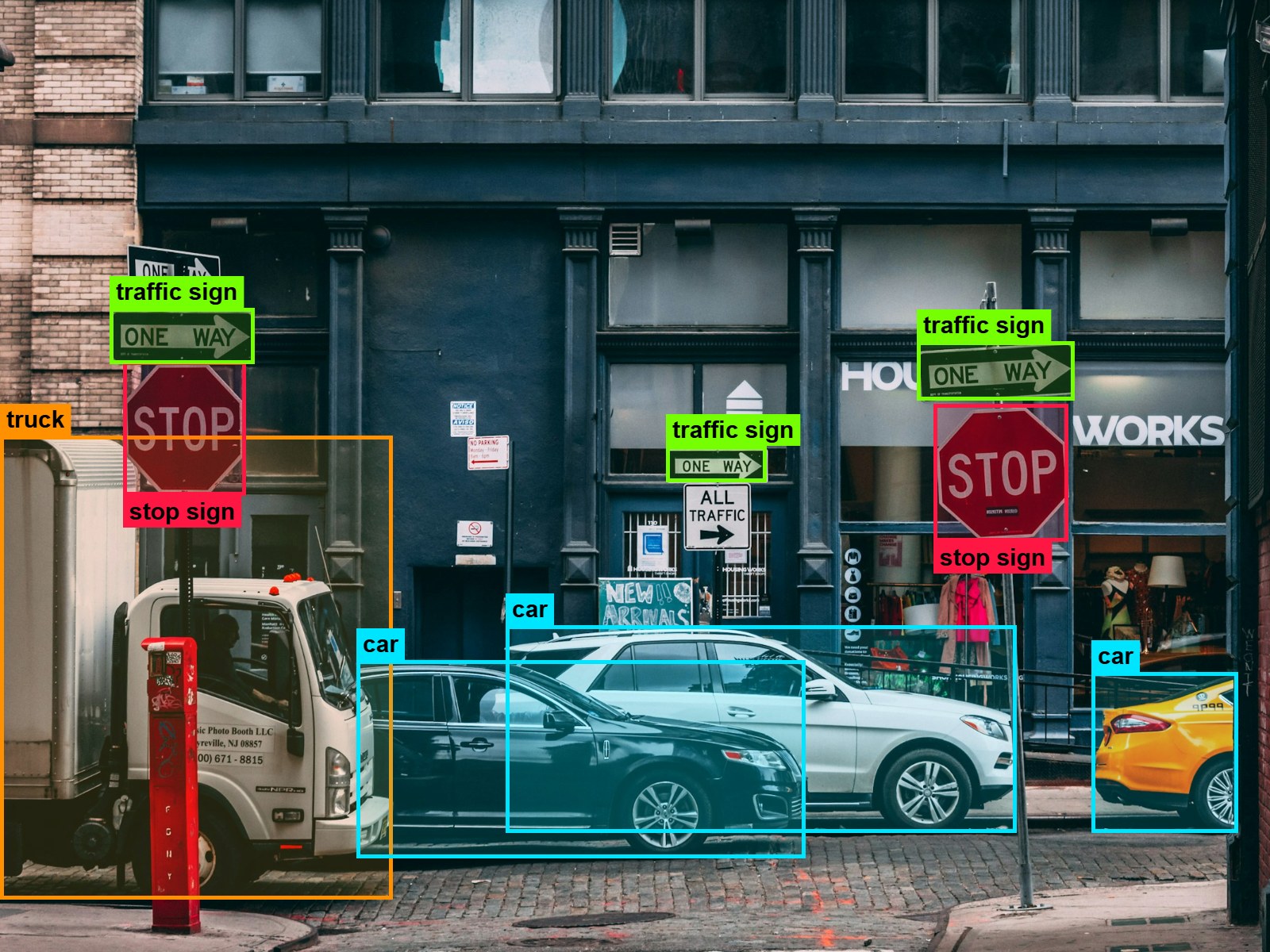
Image annotation services label objects in photos so machine learning models can learn to recognize them. Each image is marked with bounding boxes, polygons, keypoints or pixel-level masks, using the class list and rules of the project. The labeled images become the training and test data for computer vision models.
Annotation quality decides how well a model performs. Loose boxes, missed objects and inconsistent classes teach a model the wrong thing, so clear guidelines and review matter more than speed.
Types of image annotation
Image annotation comes in several types. Bounding boxes mark objects with rectangles, which suits detection tasks such as counting products or vehicles. Polygons trace an object’s outline for instance segmentation. Semantic segmentation labels every pixel by class, and keypoints mark landmarks such as joints, faces or product corners.
Which export formats are available?
COCO JSON, YOLO TXT, Pascal VOC XML and CSV are standard. If your pipeline uses another schema, a sample file is enough to match it.
How annotation projects run
Projects start with a sample batch labeled to your guidelines. After approval, the full set is annotated, and every batch is checked by a second annotator before delivery. Edge cases are logged and shared so the guidelines can be refined.
Precise outlines use the same skills as clipping path and image masking work, where edges are traced. Product image datasets often also need background removal. To prepare images before annotation, the image resizer standardizes sizes in your browser.